

Creatine may be one of the most misunderstood supplements in medicine.
For years, it was viewed primarily as a bodybuilding supplement. But today, creatine monohydrate is recognized as one of the most extensively researched supplements in human history — with evidence supporting benefits not only for muscle performance, but also for brain health, healthy aging, and neuroprotection.
At Reae Health, we consider creatine a foundational supplement for healthspan optimization.
Why Creatine Matters for Longevity
Creatine helps the body rapidly regenerate ATP — the primary energy source used by cells. This is especially important in tissues with high energy demands, such as skeletal muscle and the brain.
As we age, we naturally lose muscle mass, strength, mitochondrial efficiency, and cognitive resilience. This decline accelerates after age 50 and contributes to frailty, metabolic dysfunction, and neurocognitive decline.
Creatine helps support both muscle and brain energy metabolism — which is why it has become such an important longevity tool.
How Creatine Helps Muscle Growth
During resistance training, muscles rapidly use ATP. Creatine helps replenish ATP faster, allowing muscles to sustain higher performance and recover more efficiently.
Research consistently shows creatine supplementation can help:
This matters because muscle is not just cosmetic tissue — it plays a major role in metabolic health, glucose regulation, balance, mobility, and healthy aging.
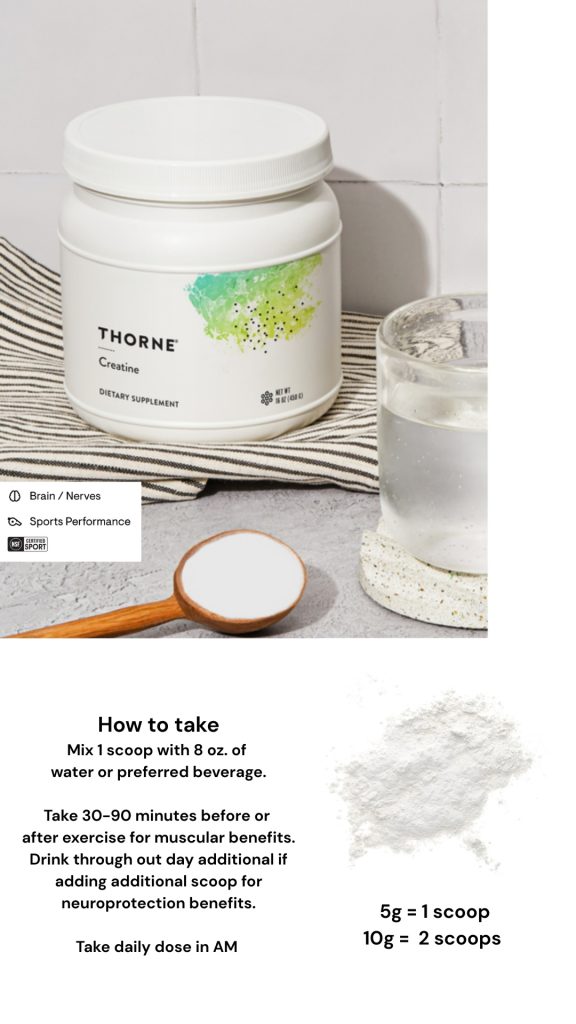
For most adults, 1 scoop daily (about 5 grams) is sufficient for muscle maintenance and performance support.
Creatine and Brain Health
One of the most exciting areas of creatine research involves neuroprotection.
The brain consumes enormous amounts of energy, and aging is associated with declining mitochondrial function and reduced brain energy metabolism. Creatine appears to help buffer cellular energy stores in the brain, particularly during periods of stress, fatigue, aging, or sleep deprivation.
Emerging research suggests creatine may help support:
This is especially important after age 50, when maintaining cognitive function becomes increasingly critical for long-term healthspan.
For adults focused on neuroprotection and healthy aging, many experts recommend 2 scoops daily (about 10 grams) for additional brain-supportive benefits.
Creatine and Sleep Deprivation
One of the more fascinating findings in recent research is creatine’s role during sleep deprivation.
Sleep loss places major energetic stress on the brain, impairing attention, reaction time, and cognitive performance. Studies suggest higher doses of creatine may temporarily help support brain energy metabolism under these conditions.
Research using approximately 20–25 grams of creatine during acute sleep deprivation has shown improvements in:
Creatine is not a substitute for sleep — but it may help the brain maintain energy availability during periods of physiologic stress.
The Best Form: Creatine Monohydrate
Despite marketing around “advanced” forms of creatine, the overwhelming majority of research supports:
Creatine Monohydrate
It remains:
Our Take at Reae Health
At Reae Health, we view creatine as one of the highest-value daily supplements for supporting:
Combined with resistance training, quality sleep, adequate protein intake, and biomarker-guided care, creatine may be one of the simplest and most evidence-backed additions to a longevity-focused lifestyle.
Save 15% on Professional-Grade Supplements
Create a Fullscript account and order directly through our practitioner dispensary for 15% savings on high-quality supplements:
References