

Get emergency contraception for as low as $0 with insurance →

At Reae, we don’t guess—we measure.
Every patient receives comprehensive, root-cause laboratory testing designed to reveal how their body is functioning beneath the surface.
Our custom panels evaluate your metabolic health, inflammation, hormone balance, organ function, and micronutrient status—the systems most impacted by GLP-1 therapies, peptide protocols, hair-loss treatments, and modern lifestyles.
Rather than applying one-size-fits-all recommendations, we use these biomarkers to identify hidden deficiencies, metabolic inefficiencies, and early risk signals.
These insights allow us to:
Our biomarker panels are designed for patients who prefer the convenience of transparent out-of-pocket pricing and direct access to advanced testing.
Patients who wish to use their health insurance may also choose to complete the same laboratory panels through Quest Diagnostics using their insurance benefits.
Your Reae provider can place a laboratory order and assist you in scheduling testing at a Quest Diagnostics location if you prefer to use insurance coverage.
This allows you to choose the testing pathway that best fits your care preferences.

Begin with advanced lab testing covering 70+ high-signal biomarkers across cardiovascular, metabolic, hormonal, nutritional, and inflammatory systems.
No waiting rooms. No guesswork. Just precision data that reveals how your body is truly functioning.
Go beyond “normal.”
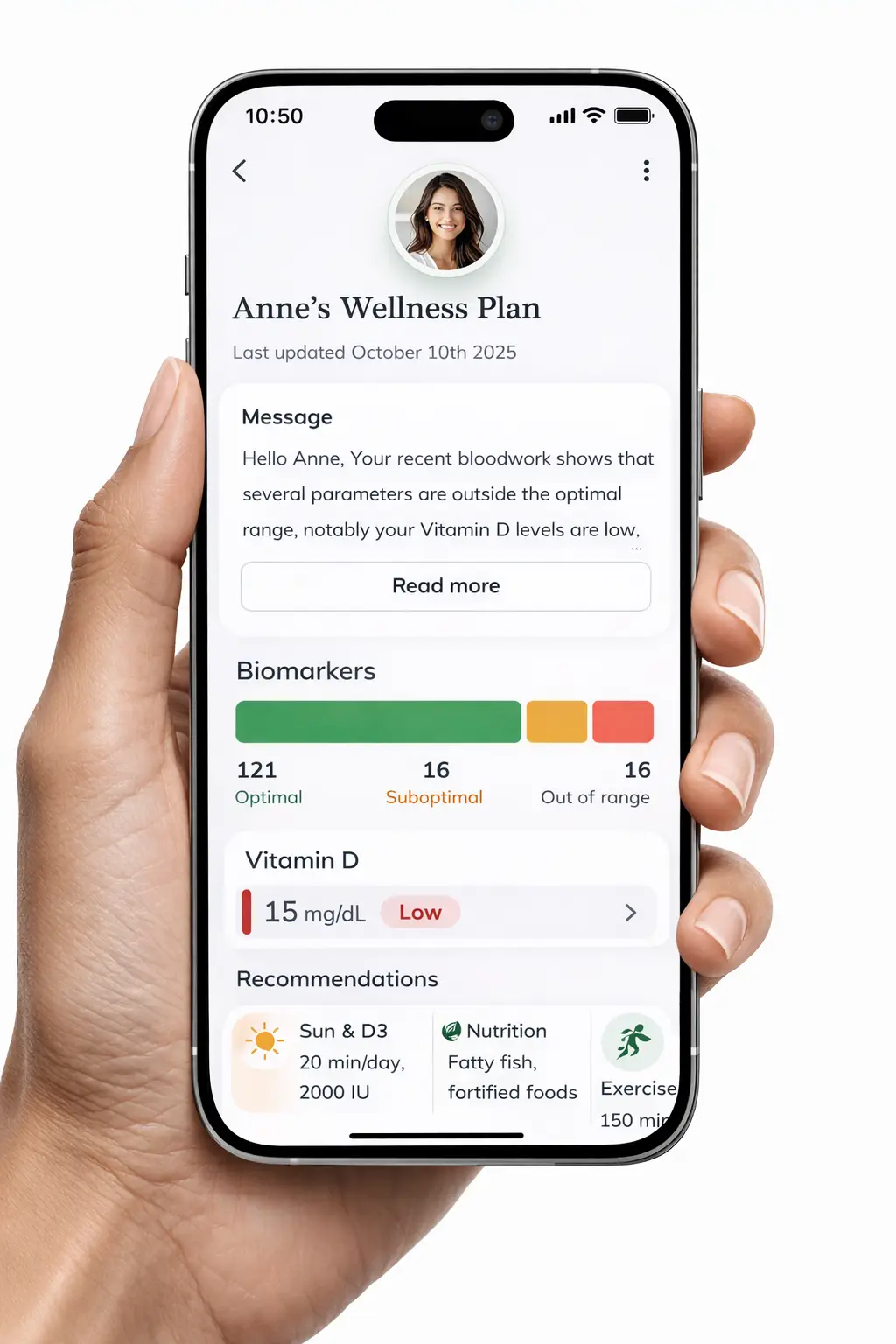
We take you through your biomarker journey, highlighting optimal ranges and identifying early risk signals long before symptoms appear.
Your expert provider explains what’s in range, what needs attention, and how each marker connects to your long-term health — giving you clarity, context, and confidence.
Your data becomes direction.
Based on your biomarkers, you’ll receive a personalized plan designed around your physiology. This may include targeted supplementation, precision nutrition, lifestyle optimization, and medical therapies when appropriate.
Built to be realistic. Actionable. Sustainable.
Health isn’t static — and neither is your plan.
Follow-up testing allows you and your provider to track progress, measure response, and refine your strategy.
This is how we move from reactive care to proactive healthspan optimization.
See what’s inside the Reae Root-Cause Panel ↓
Why we test this:
GLP-1 therapies improve cardiometabolic health, but baseline and ongoing lipid assessment is critical for long-term risk reduction. These markers evaluate cholesterol quality, particle burden, and vascular inflammation—often before traditional cholesterol numbers become abnormal.
Tests included:
Clinical relevance:
Supports cardiovascular risk stratification, inflammation monitoring, and safe long-term metabolic optimization while on GLP-1 or peptide therapies.
Why we test this:
Metabolic efficiency determines how well your body uses fuel, preserves muscle, and responds to GLP-1 medications. These markers help identify insulin resistance, blood sugar dysregulation, and early metabolic strain—key drivers of weight gain and fatigue.
Tests included:
Clinical relevance:
Guides GLP-1 dosing, protein targets, and nutrition strategies while minimizing muscle loss and metabolic slowdown.
Why we test this:
Hormones regulate metabolism, energy, body composition, mood, libido, hair growth, and skin aging. Peptides, weight loss, and aging can all shift hormone balance—sometimes subtly, but clinically meaningfully.
Tests included:
Clinical relevance:
Supports peptide therapy decisions, hair restoration protocols, body recomposition, and healthy aging strategies.
Why we test this:
Chronic inflammation and stress impair fat loss, accelerate aging, disrupt hormones, and contribute to hair thinning. These markers reflect how your body responds to physical, metabolic, and emotional stress.
Tests included:
Clinical relevance:
Helps identify stress-related plateaus, fatigue, inflammatory burden, and recovery capacity—especially important during weight loss or intensive longevity protocols.
Why we test this:
The thyroid is a master regulator of metabolism, energy, temperature, hair growth, and weight stability. Even mild dysfunction can blunt GLP-1 results and contribute to fatigue or hair shedding.
Tests included:
Clinical relevance:
Identifies under- or over-activity, autoimmune thyroid patterns, and conversion issues that may impact weight loss, hair health, and energy.
Why we test this:
GLP-1 therapies, higher protein intake, and supplements all rely on healthy kidney function. These markers ensure safe filtration, hydration balance, and metabolic clearance.
Tests included:
Clinical relevance:
Ensures treatment safety and appropriate protein, peptide, and supplementation strategies.
Why we test this:
The liver plays a central role in fat metabolism, hormone processing, detoxification, and nutrient absorption. Fatty liver and enzyme elevations are common in metabolic dysfunction—and often improve with GLP-1 therapy when monitored correctly.
Tests included:
Clinical relevance:
Monitors metabolic recovery, detox capacity, and nutrient processing during weight loss and longevity care.
Why we test this:
Your immune system reflects inflammation, nutrient sufficiency, recovery ability, and overall resilience. These markers help identify chronic inflammation, immune stress, or deficiencies that may impact healing, skin, or hair health.
Tests included:
Clinical relevance:
Supports inflammation control, recovery optimization, and long-term immune resilience.
Why we test this:
GLP-1 medications reduce appetite, which can unintentionally reduce nutrient intake. Micronutrient deficiencies can impair energy, muscle preservation, hair growth, skin health, and metabolic performance.
Tests included:
Clinical relevance:
Prevents hidden deficiencies, supports hair and skin regeneration, muscle preservation, and energy production.
Why we test this:
Healthy blood supports oxygen delivery, nutrient transport, and immune defense. These markers help identify anemia, nutrient-related fatigue, or inflammatory changes.
Tests included:
Clinical relevance:
Ensures safe energy levels, recovery, and cellular health during metabolic and longevity treatment.
Your laboratory results are provided for educational and informational purposes only and should not be used on their own to diagnose, treat, or cure any medical condition. A licensed provider will carefully review and interpret your results, offering personalized insights and recommendations tailored to support informed decisions, healthier behaviors, and long-term wellbeing.
If any findings require timely or urgent follow-up, a provider will contact you directly. Every care plan includes secure 24/7 messaging access to your provider for continued guidance, clarification, and support.